
🕵️♂️ The Unseen Face of Power: The FBI’s Intelligence Dominance
In the vast corridors of American power, one agency stands out for its secretive operations and unparalleled influence—the Federal Bureau of Investigation (FBI). While the FBI has long been viewed as the nation’s premier law enforcement agency, the truth is far more complex and, frankly, unsettling. The FBI considers itself primarily an intelligence agency, and this self-perception drives much of its behavior and culture.
🌐 Intelligence First, Law Enforcement Second
According to the FBI’s own playbook, known as the Domestic Investigations and Operations Guide (DIOG), the agency explicitly states that its primary focus is intelligence gathering, with law enforcement taking a back seat. This shift in focus is not just a matter of internal policy but a fundamental change in how the agency interacts with the public—and, more importantly, how it views its accountability.
The public might reasonably expect that an agency with such vast powers would be transparent and accountable. After all, in a democracy, aren’t public institutions supposed to answer to the people? Yet, the reality is quite the opposite. The FBI, with its intelligence-first mentality, operates in a realm where public accountability is almost non-existent. If you disagree with how the FBI conducts its operations, what can you do? You can’t vote them out, and withholding funding is practically impossible when Congress continues to pour billions into the agency’s coffers.
💰 An Agency Unchecked: The Power of Funding
With an annual budget exceeding $11 billion, the FBI is one of the most well-funded agencies in the federal government. Yet, despite its immense resources, the agency seems more interested in maintaining its intelligence apparatus than in serving the public. This disconnect between funding and accountability is a significant culture problem within the FBI, leading to a mindset where the agency feels it owes nothing to the American people.
The consequences of this mindset are evident in how the FBI handles its operations. The agency’s focus on intelligence means that it often engages in activities that are hidden from public view, shrouded in secrecy. And when these activities do come to light, they are often downplayed or “memory-holed,” deliberately kept out of the public eye.
🔍 Memory-Holing the Truth: The FBI’s Hidden Operations
One of the most telling examples of this culture of secrecy is the recent case involving a Pakistani national named ASF Merch. According to reports, the FBI arrested Merch on charges of allegedly plotting to assassinate former President Donald Trump. But the details surrounding this case are murky at best. Despite the serious nature of the charges, the story received little media attention, and the FBI’s role in the plot remains largely unexplored.
What we do know is that the FBI had been surveilling Merch for three months before his arrest. During this time, he was allegedly attempting to recruit individuals to carry out the assassination plot—a plot that, according to some experts, may have been more fiction than fact. The FBI has a history of creating terrorism where there is none, and this case appears to be no exception.
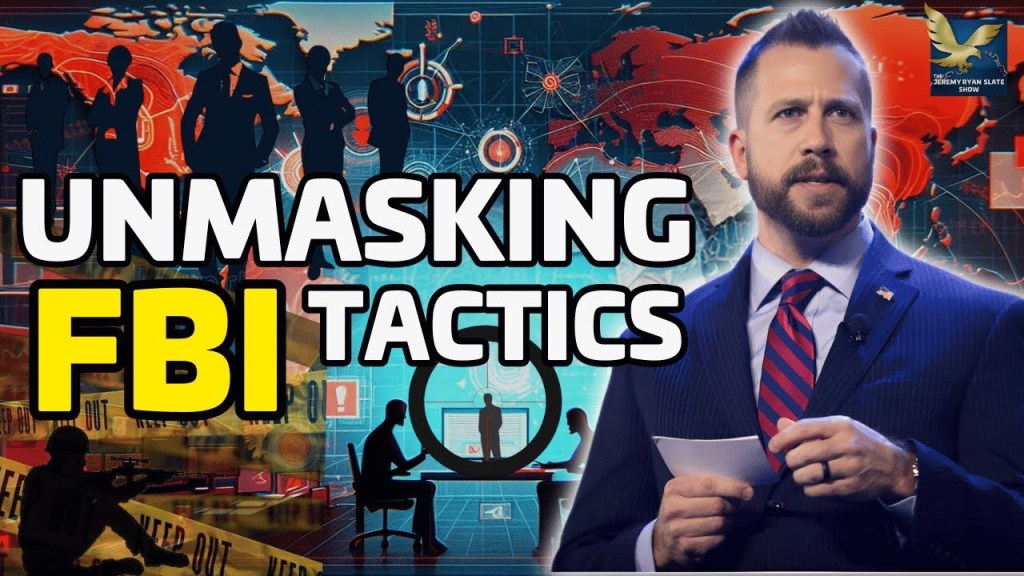
👀 The FBI’s Playbook: Creating Terrorism to Justify Its Existence
The Merch case is just one example of how the FBI operates in the shadows, creating threats that justify its continued existence and funding. By sponsoring Merch’s visa and allowing him into the United States, the FBI essentially set the stage for its own narrative—a narrative that paints the agency as the protector of national security while simultaneously avoiding scrutiny for its actions.
But what happens when these fabricated threats spill over into the real world? The recent case of a Pennsylvania school shooter raises troubling questions about the FBI’s ability to prevent real threats while focusing on manufactured ones. The shooter, a young man with little to no online presence, managed to carry out his attack despite the FBI’s extensive intelligence network. This failure highlights a critical flaw in the agency’s approach: By focusing on intelligence and manufactured threats, the FBI may be missing the real dangers lurking in our communities.
🔗 Connecting the Dots: The Need for Public Accountability
As Americans, we deserve better. We deserve an FBI that is transparent, accountable, and focused on real threats to our safety. Instead, we have an agency that operates in the shadows, manipulating public perception and avoiding accountability at every turn.
The FBI’s culture problem is not just an internal issue; it’s a problem for all of us. Without public scrutiny, the agency will continue to operate with impunity, creating threats where none exist and ignoring the real dangers that threaten our communities.
It’s time to demand accountability from the FBI. The agency’s intelligence-first approach may have served its purpose during the Cold War, but in today’s world, where threats are more diffuse and less predictable, we need an FBI that is truly accountable to the public it claims to protect.
Let’s not let this story be memory-holed. The FBI must answer to the American people.


Leave a Reply