
🎯 Understanding the Variables in Sound Signatures: A Deep Dive into Audio Forensics
When it comes to deciphering sound signatures, especially in something as critical as identifying the source of a bullet, the complexity is overwhelming. As we started this conversation, it was clear that the intricacies involved are often misunderstood, even by professionals in the field. If you’re an audio or sound engineer, you know exactly what I’m talking about. Feel free to jump into the conversation in the comments and share your insights. 🎧
The Intricate Dance of Sound and Environment 🌍
Let’s break it down. The environment plays a crucial role in how sound is perceived and recorded. Think about a podcast studio—when you’re placing a sound dampener or positioning a microphone, the sound changes depending on what’s in the room. Now, imagine this complexity multiplied in an outdoor scenario with hundreds of people moving, scattering, and creating background noise. Every movement, every shift in the environment, alters the sound signature.
Even the microphone’s placement and the distance from the sound source matter significantly. The same is true for a firearm. The sound can vary based on how a bullet is fired, the barrel’s heat, the presence of a suppressor, and even the amount of gas in the suppressor after the shot. All these variables add layers to the sound signature, making it a challenging task to accurately determine the origin of a sound, especially with something as rudimentary as a cellphone recording. 📱
The Myth of Competence in Law Enforcement Agencies 🛡️
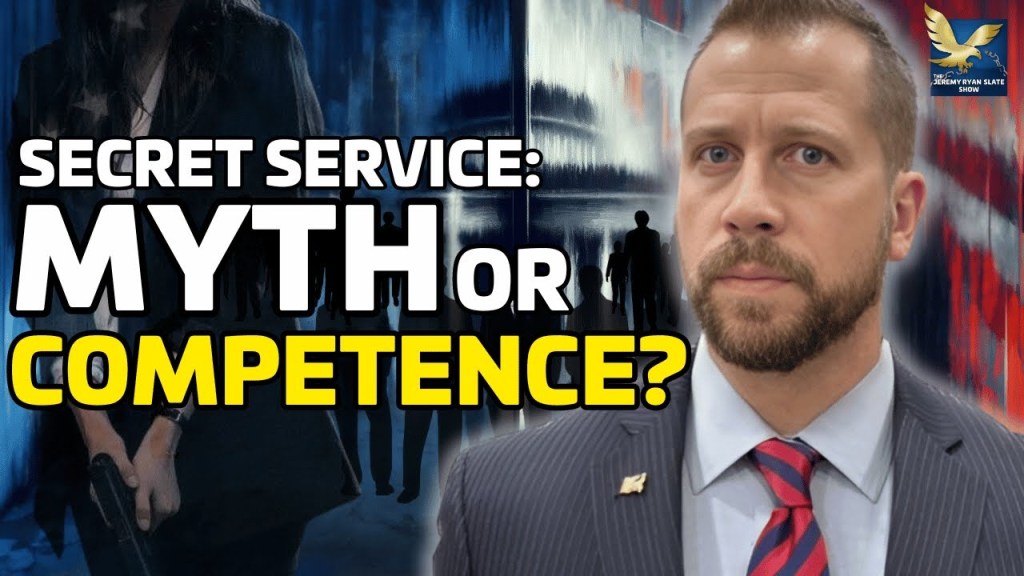
Here’s where things get even more interesting. We often assume that agencies like the Secret Service operate with an unparalleled level of competence. But how true is that assumption? The reality might surprise you. The idea that the Secret Service is this hyper-competent organization is more of a myth than a fact. If they were as competent as we’re led to believe, wouldn’t we have heard about more thwarted threats? After all, it would be a major feather in their cap to showcase how they intercepted an armed or explosive-laden threat in real-time. Yet, those stories are few and far between. 🤔
In fact, the incident we discussed involved a 20-year-old scaling a building, firing eight rounds, and possibly endangering a future president of the United States. This kind of breach points to a level of incompetence that is frankly shocking. And this isn’t the first time a presidential leader has been in such danger.
The Default Position of Government: Incompetence 🤷♂️
Let’s face it—government organizations are not infallible. In fact, their default position often seems to be one of incompetence. When you think about it, how many government agencies can you name that consistently operate with high efficiency? It’s a short list, isn’t it? This isn’t just speculation; it’s backed by examples where these organizations have failed in high-stakes situations. And yet, people continue to believe in the myth of government competence, especially when it comes to agencies like the Secret Service.
This isn’t to say that there isn’t a possibility of intentional wrongdoing within these organizations. However, jumping to conclusions that there’s a grand conspiracy at play often overshadows the simpler explanation—that sometimes, these agencies just aren’t as good at their jobs as we’d like to believe. 🕵️♂️
In conclusion, the conversation we had sheds light on the complex world of sound signatures and the often-overlooked issue of competence within our government agencies. It’s a reminder that sometimes, the truth is far less glamorous than the myths we build around it.


Leave a Reply